Retrieval-Augmented Generation (RAG) is no longer just hype, but the absolute backbone of any serious AI application. Although LLMs are getting increasingly larger context windows, targeted and cost-effective retrieval of the right information remains the main bottleneck. For indie developers building with their own local stack—think of workflows in n8n, local LLM gateways like LiteLLM, and their own home server or NAS—efficiency, privacy, and costs are the deciding factors.
In this edition of AI-Radar, we dive into the most important shifts of this summer. We see GraphRAG maturing thanks to drastic cost reductions, the community returning to pragmatic database choices, and the key to a well-functioning agent lying not in text generation, but in the precision of the retrieval phase.
1. GraphRAG and the breakthrough of LazyGraphRAG
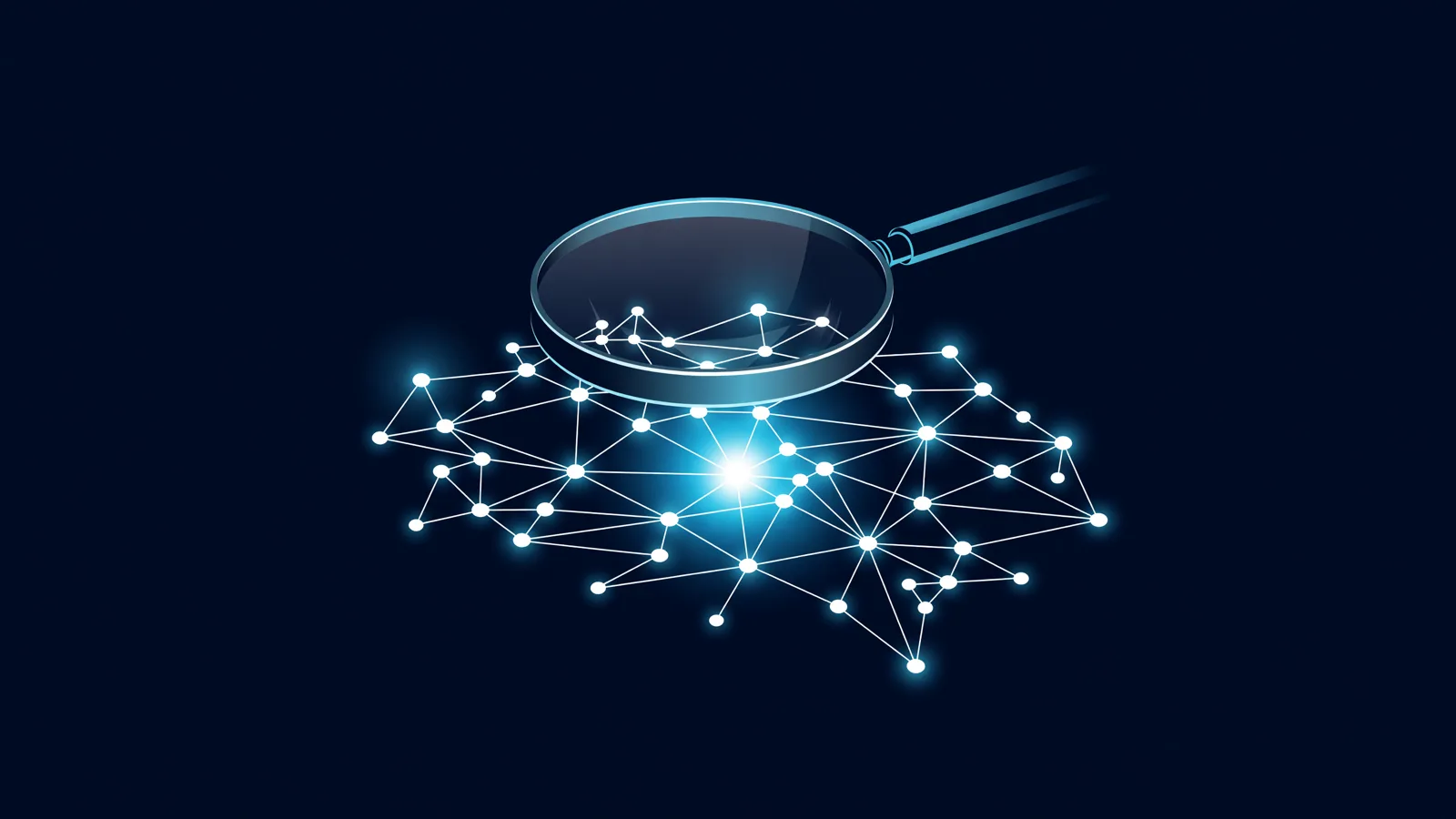
The classic RAG pipeline often gets stuck on complex, relational queries where information is scattered across multiple documents. GraphRAG solves this by extracting entities and relationships, building a knowledge graph, and generating summaries via community detection (such as the Leiden algorithm). On common multi-hop benchmarks this yields a recall gain of roughly fifteen to thirty points, with the largest effect on questions that have to combine information from different documents.
The major downside has always been the cost: indexing a corpus quickly cost between $20 and $500. The introduction of LazyGraphRAG changes this by reducing indexing costs by a whopping 99.9% (~0.1% of the original costs), while maintaining answer quality.
Why this is relevant to your stack: If you are dealing with highly relational data—such as network maps, complex document structures, or genealogical data—GraphRAG was previously unaffordable for hobby projects or small indie apps. With LazyGraphRAG, you can now run this advanced structure without your API bill exploding.
2. The 7 RAG design patterns for production
Simply loading text and sending it to a vector database ("Naive RAG") does not scale in production environments. The community has now standardized on more complex patterns. Retrieve-and-Rerank has become the absolute production standard, supplemented by multimodal and graph-based variants. Furthermore, Agentic RAG—where an AI agent acts as a router and dynamically chooses the best retrieval strategy based on the query—is now the default choice.
Why this is relevant to your stack: If you are building workflows in, for example, n8n or with your own Python agent, use these patterns as a blueprint. Set up your agent configuration so that it first assesses the complexity of the query (routing) before executing unnecessarily heavy searches. For smart routing of these queries to the right models, see also our guide on model routing.
3. Chunking and Reranking: the real key to quality
Data from Digital Applied shows that as much as 73% of errors in RAG systems originate from the retrieval phase, rather than the generation phase of the LLM. The combination of hybrid search (vector + keyword) and contextual retrieval reduces the error rate by about 69%. The most significant quality gain is achieved by applying a reranking step with a cross-encoder to the top 50 to 100 candidates. In terms of chunking, a recursive splitting of 512 tokens remains the pragmatic standard; the added value of chunk overlap is highly questioned in recent research.
Why this is relevant to your stack: If your local LLM hallucinates or provides irrelevant answers, it often makes no sense to immediately switch to a larger (and slower) model. First optimize your chunking strategy and add a lightweight, locally running reranking model to your pipeline. This saves computing power on your home server and immediately delivers better results.
4. Which vector database do you choose in 2026?
The market for vector databases has matured. For workloads up to a few million vectors, PostgreSQL with the pgvector extension has now become the absolute favorite. This allows you to store embeddings directly alongside your regular application data in the same tables and transactions. For billion-scale, Milvus remains the largest open-source player, while Weaviate excels in out-of-the-box hybrid search.
Why this is relevant to your stack: Keep your homelab infrastructure simple. If you already have a PostgreSQL database running for your own projects, setting up a separate vector database is often unnecessary overhead. With pgvector, you keep everything under one hood, which significantly simplifies backups and management.
5. The evolution of embedding models
The choice of the right embedding model highly depends on your source data. Google's Gemini Embedding 2 is an impressive all-modality model that natively supports text, images, video, audio, and PDFs in more than 100 languages (with 3072 dimensions and native Matryoshka embeddings). On the open-source side, Microsoft Harrier leads the MTEB-v2 benchmark for multilingual text.
Why this is relevant to your stack: If you are indexing personal archives consisting of scanned documents or images, you no longer need to build complex OCR and chunking pipelines. By utilizing multimodal embeddings, you can directly index these files and make them searchable within your own agent setup.
What can you do with this?
As an indie developer with your own server or homelab, you can immediately put these insights to work to make your AI systems faster, cheaper, and more accurate:
- Choose pgvector: Do you have fewer than a few million documents? Do not set up a separate vector database, but activate
pgvectoron your existing PostgreSQL instance. This saves resources on your home server. - Add a Reranker: Run a lightweight cross-encoder model (such as BGE-Reranker) locally in your n8n or Python workflows. This is the cheapest way to drastically increase the accuracy of your RAG system without upgrading your LLM.
- Experiment with LazyGraphRAG: Do you have data with complex interrelationships? Move away from flat vector searches and explore how you can use LazyGraphRAG to add structure without high API costs.